
Why Do Some Dentists Recommend Braces Over Invisalign?
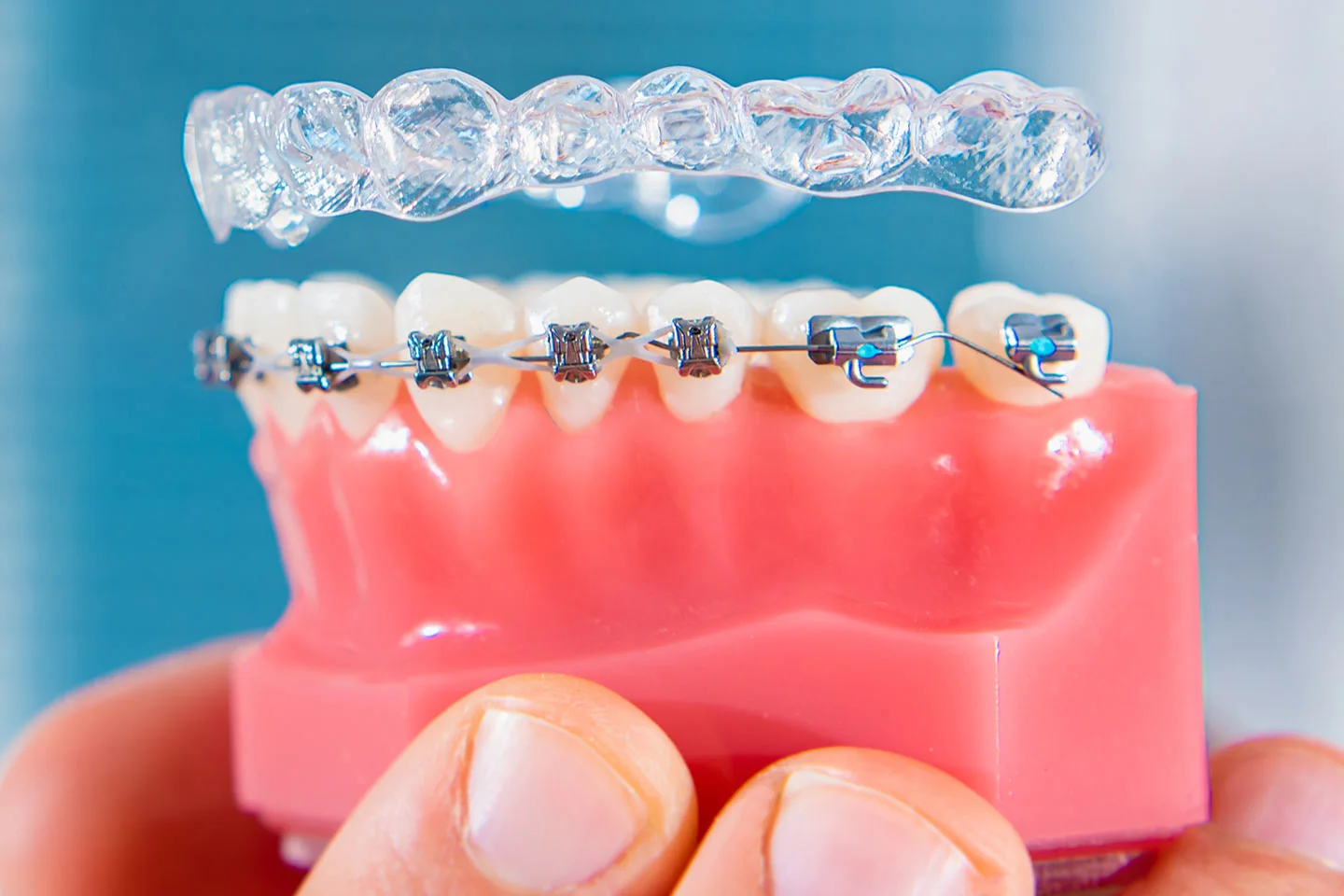
When you decide to finally straighten your smile, the first thing that usually comes to mind is Invisalign. It is easy to see why. The idea of clear, removable trays that let you eat whatever you want is incredibly appealing. However, you might be surprised during a consultation when a dentist or orthodontist suggests traditional metal or ceramic braces instead.
At Medford Square Dentistry & Implants in Medford, MA, we prioritize your long term dental health above all else. It is important to remember that dentists are not "against" clear aligners. In fact, many of them love the technology. But their primary goal is to ensure you end up with a healthy, functional bite that lasts a lifetime. Sometimes, the path to that perfect smile requires the heavy lifting that only brackets and wires can provide. Understanding the "why" behind their recommendation can help you feel more confident in your treatment choice.
The Power of Control and Precision
The main reason a professional might steer you away from Invisalign is the level of control required for your specific case. Think of Invisalign as a gentle push and braces as a firm, constant pull.
Traditional braces are physically bonded to your teeth and connected by a wire that can be adjusted with incredible precision. This allows a dentist to move teeth in ways that plastic trays sometimes struggle with. For example, if a tooth needs to be rotated significantly or moved vertically, the anchor point provided by a bracket is often much more effective.
Clear aligners work by gripping the surface of the tooth. If your teeth are shaped in a way that does not give the plastic much to hold onto, the trays might slip or fail to apply the right amount of pressure. In these instances, braces are simply the more reliable tool for the job.
Handling Complex Bite Issues
While Invisalign technology has come a long way and can now handle many bite problems, there are still limits. Severe overbites, underbites, or crossbites often involve more than just the position of the teeth; they often involve the relationship between the upper and lower jaws.
Correcting a major bite discrepancy often requires the use of elastics, headgear, or other specialized appliances that integrate seamlessly with traditional braces. While Invisalign can use "attachments" (tiny, tooth colored bumps) and rubber bands, they might not provide the mechanical force needed for a severe skeletal issue. If your dentist feels that clear aligners would only provide a cosmetic fix without addressing the underlying bite problem, they will likely recommend braces.
The Compliance Factor
This is a human element that we often overlook when we are excited about a new treatment. Invisalign only works if you wear the trays for at least 22 hours a day. You have to be incredibly disciplined about putting them back in after every meal, snack, or cup of coffee.
Dentists spend a lot of time getting to know their patients. If they suspect that a patient, especially a busy teenager or a forgetful adult, might struggle to keep the trays in, they may suggest braces as a safer bet. Braces are "set it and forget it." Since you cannot take them out, they are working 24/7 to move your teeth. This removes the risk of the treatment taking twice as long because the trays spent more time in a pocket than in your mouth.
Dental Foundations and Pre-existing Work
Before any orthodontic work begins, your dentist has to look at the "foundation" of your smile. This includes your gums, the bone density in your jaw, and any past dental work like bridges or crowns.
- Bridges: A dental bridge connects two or more teeth together. Because Invisalign moves teeth individually, a bridge can act as an anchor that prevents the trays from working correctly. Braces can sometimes be modified to work around these structures more effectively.
- Gum Health: If you have active gum disease, moving teeth can actually make the problem worse. A dentist will always prioritize getting your gums healthy before starting any alignment process.
- Short Teeth: If your natural teeth are very short or have been worn down over time, the aligner trays may not have enough surface area to "grab," making the treatment less predictable.
The Question of Speed and Cost
In some complex cases, braces can actually be faster than Invisalign. Because they have more "torque" or pulling power, they can sometimes close large gaps or untangle severely crowded teeth in fewer months than clear aligners.
While the cost of both treatments is often comparable in 2026, there are times when a specific type of braces might be more budget friendly. Your dentist wants to find the intersection where the best clinical outcome meets your financial needs.
When Invisalign is Still a Great Choice
It is worth noting that for mild to moderate crowding, small gaps, and many adult cosmetic cases, Invisalign remains a fantastic option. The technology is constantly improving, and many cases that were once "braces only" can now be treated with clear trays. The key is the initial exam. When a dentist says "no" to Invisalign, they are usually saying "yes" to a more stable, healthy result for your specific anatomy.
Your Partners in Health at Medford Square
At Medford Square Dentistry & Implants, we know that the psychological part of the journey, how you feel about the process, is just as important as the clinical outcome. We are located at 30 Main St, Medford, MA 02155, and we are dedicated to helping our neighbors find the most effective path to a smile they love.
Whether you are a candidate for Invisalign or would benefit more from traditional braces, we are here to provide the clinical skill and the supportive environment you need. Let’s work together to create a personalized plan that fits your life and your health goals.
Contact us at Medford Square Dentistry & Implants today to book your consultation and get a clear plan for your future.
Common Questions About Choosing a Treatment
Q: Can I start with braces and switch to Invisalign later?
A: In many cases, yes. Some dentists use a "hybrid" approach where they use braces for the first six months to handle the heavy lifting and then switch to clear aligners to finish the job.
Q: Is the pain worse with braces compared to Invisalign?
A: Both treatments cause some discomfort because your teeth are being moved. Braces may cause more irritation to the insides of your cheeks at first, while Invisalign causes a dull pressure each time you move to a new tray.
Q: Why are mail order aligners different from Invisalign?
A: Mail order kits lack the in person supervision of a dentist. A professional monitors your roots and bone health at every visit to make sure your teeth are staying healthy while they move.
Q: How often will I need to visit the office for braces vs. Invisalign?
A: Braces typically require a visit every 4 to 6 weeks for adjustments. Invisalign often allows for longer gaps between visits, sometimes 8 to 10 weeks, as long as you are staying on track with your trays.


Hours
Monday–Friday: 9 AM - 5 PM
Saturday: 9 AM - 3 PM
Sunday: Closed


© 2025 Medford Square Dentistry & Implants | All Rights Reserved | Privacy Policy | HIPAA Policy | Website Design by Remedo